How to Apply for a U.S. Visa: A Step-by-Step Guide
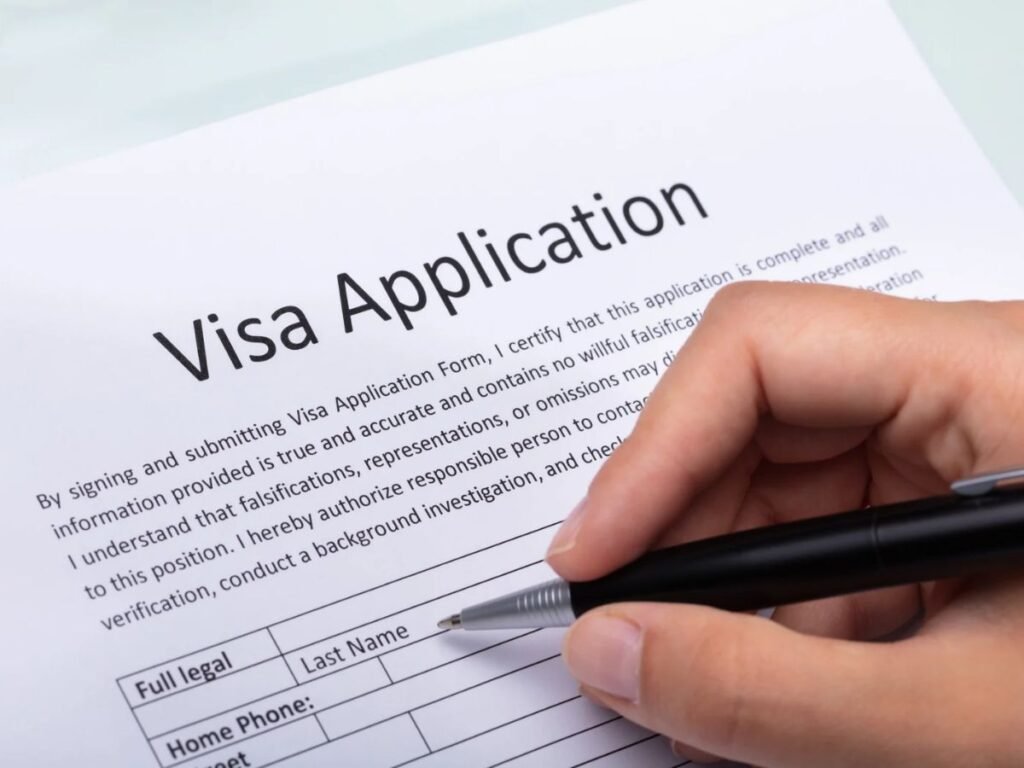
A practical guide to understanding the U.S. visa application process, preparing your documents, and getting ready for your visa interview.
Applying for a U.S. visa can feel overwhelming, especially if it is your first time. From choosing the appropriate visa category to completing online forms, paying application fees, and preparing for an interview, there are several important steps to understand.
The good news is that the process becomes much easier to navigate when you know what to expect and prepare your information in advance.
Whether you plan to visit family, explore the United States, attend university, or travel for business, this guide will help you understand the typical application journey.
The steps below focus primarily on nonimmigrant visas, which are used for temporary travel. Immigrant visas follow a different process, explained briefly later in this article.
Step 1: Understand Which U.S. Visa You Need
Before starting an application, it is important to understand the different U.S. visa categories.
The appropriate visa depends on the purpose of your intended travel, not simply how long you would like to stay.
Common U.S. visa categories
| Visa type | General purpose |
|---|---|
| B1 | Temporary business visits, such as eligible business meetings or conferences |
| B2 | Tourism, vacations, medical treatment, or visiting family and friends |
| B1/B2 | Combined business and tourism visitor visa |
| F1 | Academic studies at qualifying U.S. institutions |
| M1 | Vocational or nonacademic studies |
| J1 | Approved exchange visitor programs |
| H, L and other work visas | Certain types of authorized temporary employment |
| Immigrant visas | Immigration through qualifying family, employment, or other pathways |
Some travelers may be eligible for the Visa Waiver Program and ESTA instead of obtaining a visitor visa. Eligibility depends on nationality and other requirements.
Preparation tip: Start by defining the primary purpose of your trip. If you are uncertain about the appropriate category, review the U.S. Department of State’s official Visa Wizard.
The final determination of visa eligibility belongs to the appropriate U.S. authorities.
Step 2: Complete the DS-160 Online Application
For most nonimmigrant visa applicants, Form DS-160 is a central part of the application process.
The DS-160 is an online form used to collect information about the applicant’s identity, travel plans, background, and other relevant circumstances.
Information you may need
Depending on your situation, prepare information such as:
- Valid passport details.
- Personal and contact information.
- Travel plans, if already known.
- Previous U.S. travel history.
- Employment and education history.
- Family information.
- Other background information requested by the form.
You should complete the form carefully and provide accurate, truthful, and complete answers.
Practical DS-160 preparation tips
Check your personal information. Make sure names, passport numbers, and dates match your official documents.
Be consistent. Review dates, employment information, and travel details for accuracy.
Save your progress. Follow the system’s instructions for retrieving or saving your application while working.
Review before submission. Some mistakes may require corrective action after submission and could affect your appointment arrangements.
Once the DS-160 has been submitted, save and print its barcode confirmation page. You generally do not need to print the entire application.
Complete the form through the official Consular Electronic Application Center.
Step 3: Pay the Visa Application Fee
Most nonimmigrant visa applicants must pay a nonrefundable application processing fee.
The amount varies depending on the visa category.
For example, the U.S. Department of State currently lists a $185 application processing fee for common non-petition-based visa categories, including B1/B2, F1, and M1.
Other visa categories may have different processing fees. Additional issuance or category-specific fees may also apply.
Important things to understand
- Government application fees are separate from any third-party preparation service fees.
- Application processing fees are generally nonrefundable, including when an application is refused.
- Payment methods and procedures vary depending on the location where you apply.
- Always confirm the current fee before making payment.
Follow the payment instructions provided by the relevant U.S. Embassy or Consulate and its authorized appointment service.
For official fee information, visit the U.S. Department of State Visa Fees page.
Step 4: Schedule Your Visa Interview
After completing the required application steps, you may need to schedule an interview at a U.S. Embassy or Consulate.
Most nonimmigrant visa applicants are generally required to attend an interview, although limited exceptions exist.
Under Department of State instructions updated in July 2026, nonimmigrant visa applicants should generally schedule interviews in their country of nationality or residence, subject to designated processing locations and applicable exceptions.
Before scheduling
Check:
- The correct U.S. Embassy or Consulate for your application.
- Appointment availability.
- Required fee payment procedures.
- DS-160 confirmation requirements.
- Local interview and document instructions.
- Whether any published interview-waiver provisions may apply.
Interview appointment wait times vary significantly by location, visa category, and demand.
For this reason, it is sensible to begin preparing well before your intended travel date.
You can review the official Global Visa Wait Times.
Important: Interview-waiver rules can change. Previous U.S. visa holders should not assume that renewing a visa automatically eliminates the need for an interview.
Step 5: Prepare Your Supporting Documents
Organizing your documents before your interview can make the process easier to manage.
The documents required depend on the visa category, the applicant’s circumstances, and the instructions issued by the relevant U.S. Embassy or Consulate.
Common documents for visitor visa applicants
These may include:
- A valid passport.
- DS-160 confirmation page.
- Interview appointment confirmation, where applicable.
- Visa application fee receipt, when required.
- A compliant visa photograph, if required.
- Additional supporting information relevant to the purpose of travel.
Depending on the case, an applicant may also prepare documentation concerning employment, education, finances, travel plans, or other relevant circumstances.
These materials are not a universal checklist of mandatory documents. Follow the specific official requirements for your visa category and interview location.
Additional documents for students
Applicants for F1 or M1 student visas generally need documents associated with their educational program, such as Form I-20, and must follow applicable SEVIS requirements.
Document preparation tips
Organize your files into clearly labeled groups.
Keep originals and copies where required.
Review document dates, names, and other identifying information.
Avoid providing altered, misleading, or fabricated documents.
Remember: A large stack of documents is not necessarily better preparation. Relevance, authenticity, and compliance with the official instructions are more important.
Step 6: Prepare for Your U.S. Visa Interview
The visa interview is an important part of the application process for many applicants.
A consular officer may ask questions to understand the purpose of your trip, your circumstances, and other information relevant to the visa category.
The specific questions depend on your application.
Common topics for visitor visa interviews
Applicants may be asked questions such as:
- What is the purpose of your visit to the United States?
- How long do you plan to stay?
- Who will pay for your trip?
- What do you do for work or study?
- Have you traveled internationally before?
- Do you have relatives in the United States?
- What are your plans after your visit?
These are examples for preparation, not an official or exhaustive list of interview questions.
Five practical interview tips
1. Understand your own application. Be familiar with the information submitted in your DS-160.
2. Answer truthfully. Your responses should reflect your actual circumstances, not memorized answers designed to create a particular impression.
3. Keep answers clear. Listen carefully and respond directly to what the officer asks.
4. Prepare your documents. Know where important documents are located if they are requested.
5. Practice communicating. Rehearsing how to explain your genuine travel plans can help you become more comfortable discussing them.
There is no script that guarantees visa approval. Consular officers make decisions based on applicable law and the information available in each case.
Step 7: Attend Your Interview and Follow the Next Instructions
On the day of your interview, follow the instructions provided by your U.S. Embassy or Consulate.
Arrive according to your appointment instructions and comply with any restrictions on electronic devices, bags, or other belongings.
After your interview, several outcomes are possible.
Visa issuance
If your visa is approved for issuance, follow the instructions for receiving your passport and reviewing the visa information.
Refusal
If your application is refused, review any written information provided by the consular officer to understand the stated basis and available next steps.
Administrative processing
Some applications require additional review or information. The time needed can vary, and no particular completion date is guaranteed.
You can use the official CEAC Visa Status Check to check case status when applicable.
Avoid making nonrefundable travel commitments until you have received the appropriate travel documentation.
Also remember that an issued visa does not guarantee entry into the United States. Admission is determined by U.S. Customs and Border Protection at the port of entry.
What If You Are Applying for an Immigrant Visa?
The immigrant visa process is different from the temporary visa procedure described above.
For many family-based or employment-based immigrant visa cases, the process may involve:
- Filing an appropriate immigration petition.
- Obtaining petition approval when required.
- Completing National Visa Center processing.
- Paying applicable government fees.
- Completing Form DS-260.
- Preparing financial and civil documents.
- Attending the required medical examination and immigrant visa interview.
- Following instructions after the consular decision.
The precise process depends on the immigration category and the applicant’s circumstances.
For an official overview, review the U.S. Department of State Immigrant Visa Process.
Common Mistakes to Avoid When Applying for a U.S. Visa
Even well-prepared applicants can encounter unnecessary problems when important details are overlooked.
Selecting an inappropriate visa category. Begin with the actual purpose of travel and review official category information.
Entering inaccurate information. Review your application carefully before submitting it.
Using outdated instructions. Visa requirements and procedures can change, so check official sources.
Applying too close to your travel date. Appointment availability and processing times may be unpredictable.
Assuming an invitation letter guarantees approval. A supporting document does not replace the legal requirements for visa issuance.
Not understanding your submitted information. You should be able to explain your application truthfully and clearly.
Relying on promises of guaranteed approval. No private visa preparation company can guarantee a U.S. visa decision.
Frequently Asked Questions
How long does it take to get a U.S. visa?
The time depends on the visa category, location, appointment availability, and individual case processing. Some applications also require additional administrative processing.
Check current official appointment information rather than relying on a fixed timeline.
Can I apply for a U.S. visa online?
Many application steps can be completed online, including Form DS-160 for most nonimmigrant visa applications.
However, applicants may still need to attend an in-person interview and provide required documents.
Can I renew my U.S. visa without an interview?
Some applicants may qualify for an interview waiver under current rules.
Eligibility is limited and subject to specific requirements. A consular officer may still require an interview.
Is a visa interview always required?
No. Certain limited exceptions exist, but most nonimmigrant visa applicants are generally required to attend an interview.
Consult the current Department of State rules and the instructions applicable to your location.
Does paying the visa application fee guarantee approval?
No. Government application fees are generally paid for processing the application, not for obtaining a guaranteed result.
Visa issuance decisions are made by authorized U.S. officials.
Make Your U.S. Visa Preparation More Organized with KPVISA
Preparing for a U.S. visa does not have to mean managing every instruction, form, and document checklist without any structure.
KPVISA is an online visa preparation support platform designed to help applicants navigate preparation tasks with greater clarity and convenience.
Depending on the service package, KPVISA offers:
- Step-by-step preparation guides.
- Structured document checklists.
- AI-powered interview practice.
- Progress tracking and reminders.
- Multilingual preparation resources.
- Human assistance within the purchased service scope.
KPVISA provides preparation tools and administrative guidance. Applicants remain responsible for their own applications, official submissions, and government fees.
Ready to Take the Next Step?
Whether you are preparing for a visitor visa, student visa, or immigrant visa interview, explore the KPVISA services available for your situation.
Explore KPVISA Visa Preparation Services
Or learn more about our B1/B2 Tourist & Business Visa Preparation Package.
Official Sources & Further Reading
The following U.S. government resources provide additional guidance:
- U.S. Department of State – Visitor Visas
- DS-160 Online Nonimmigrant Visa Application
- U.S. Visa Application Fees
- Global Visa Wait Times
- Interview Waiver Information
Last reviewed: October 2026. Visa policies, fees, and procedures may change. Always verify current requirements with official U.S. government sources before taking action.
Important Disclaimer
KPVISA is a brand of KPLAW USA LLC (Missouri, USA). KPVISA is not a law firm or government agency and does not provide legal advice or represent applicants before U.S. government agencies.
This article provides general educational information and should not be considered individualized immigration advice. U.S. visa eligibility and issuance decisions are determined solely by the appropriate U.S. authorities.
This guide is general information, not legal advice. Rules change – always check the official U.S. government website for your case.